All Updates
My PhD thesis
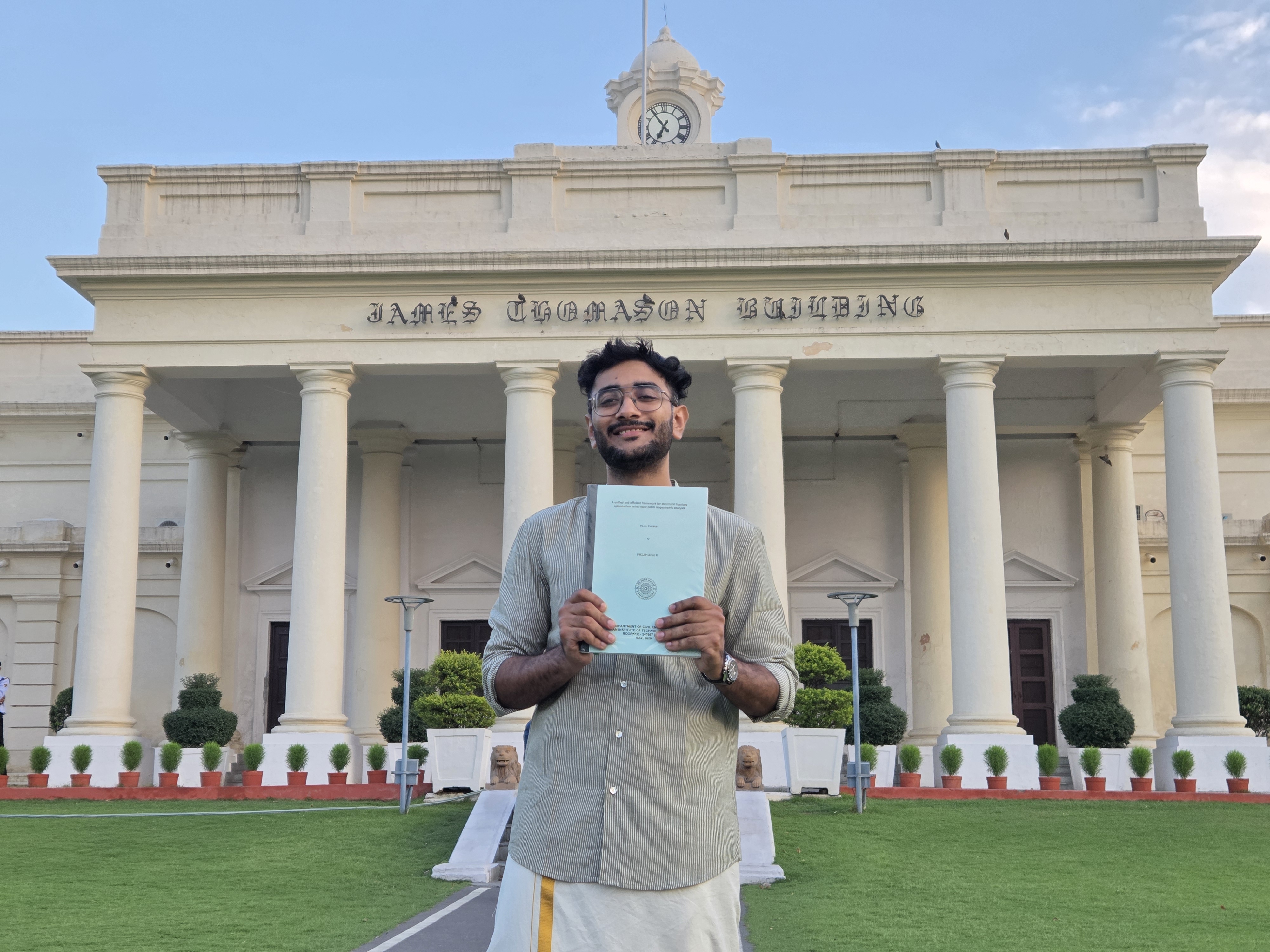
I have always wanted to write fiction. Instead, I ended up writing the farthest thing from it - a scientific thesis.
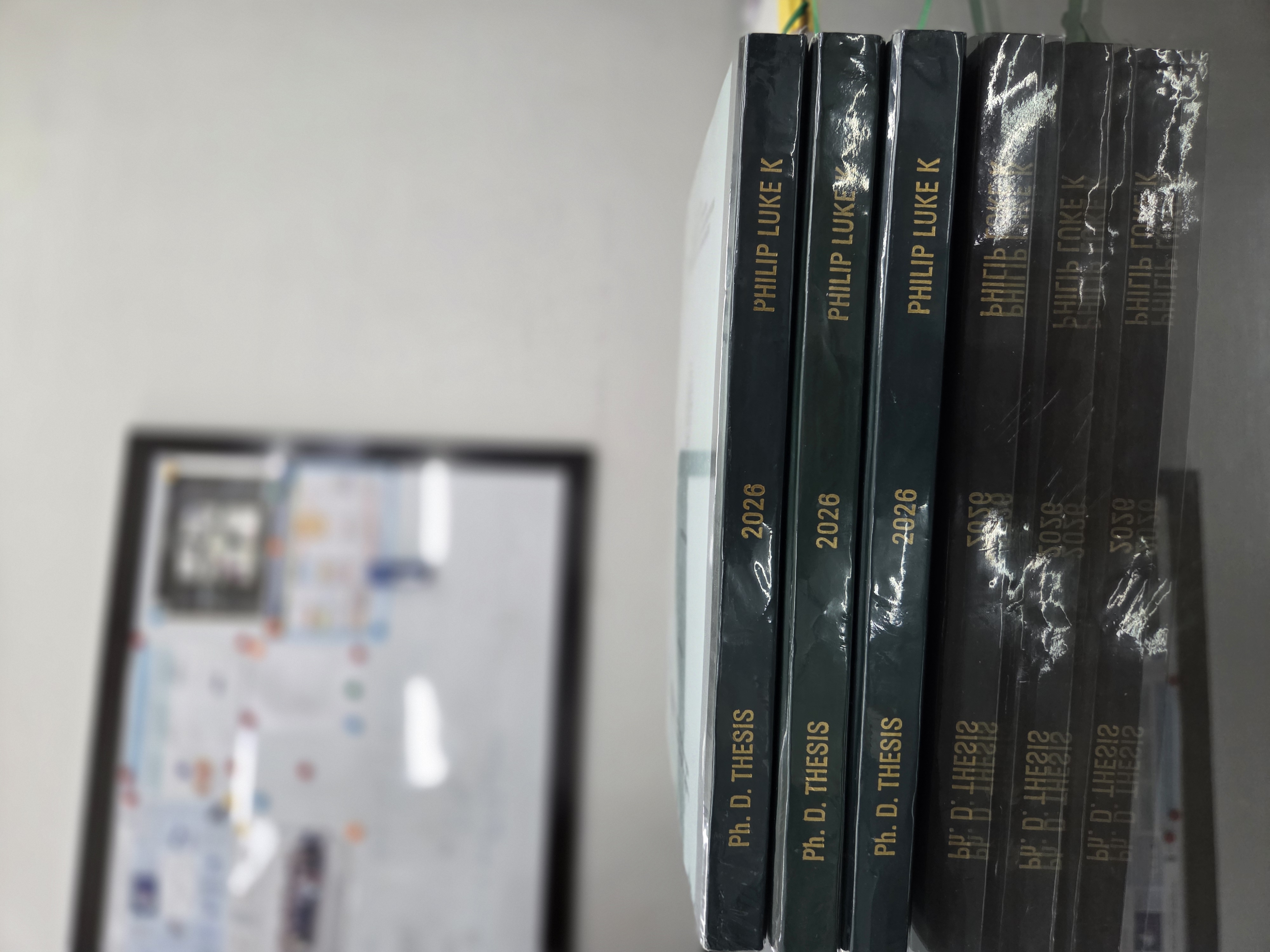
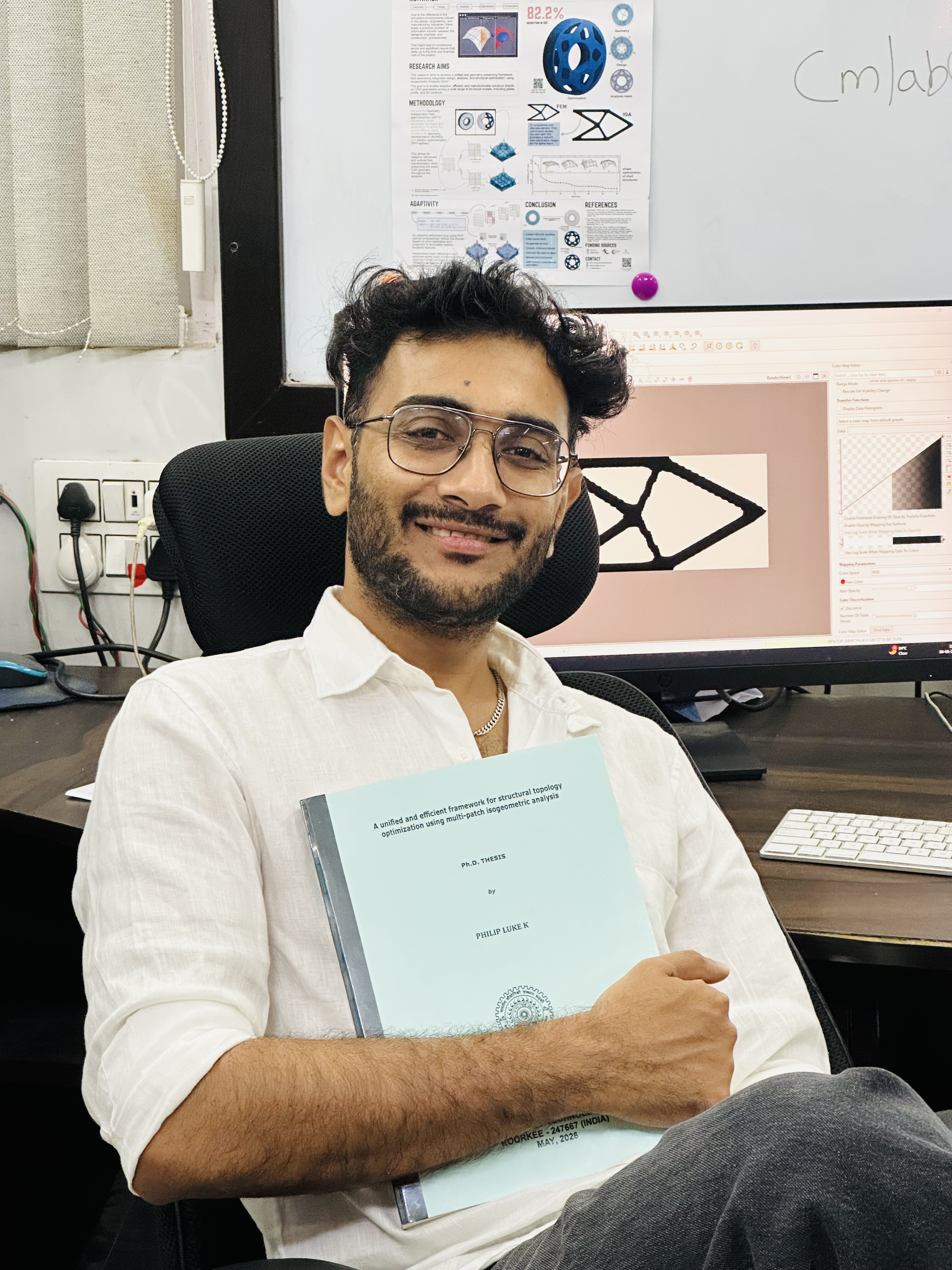
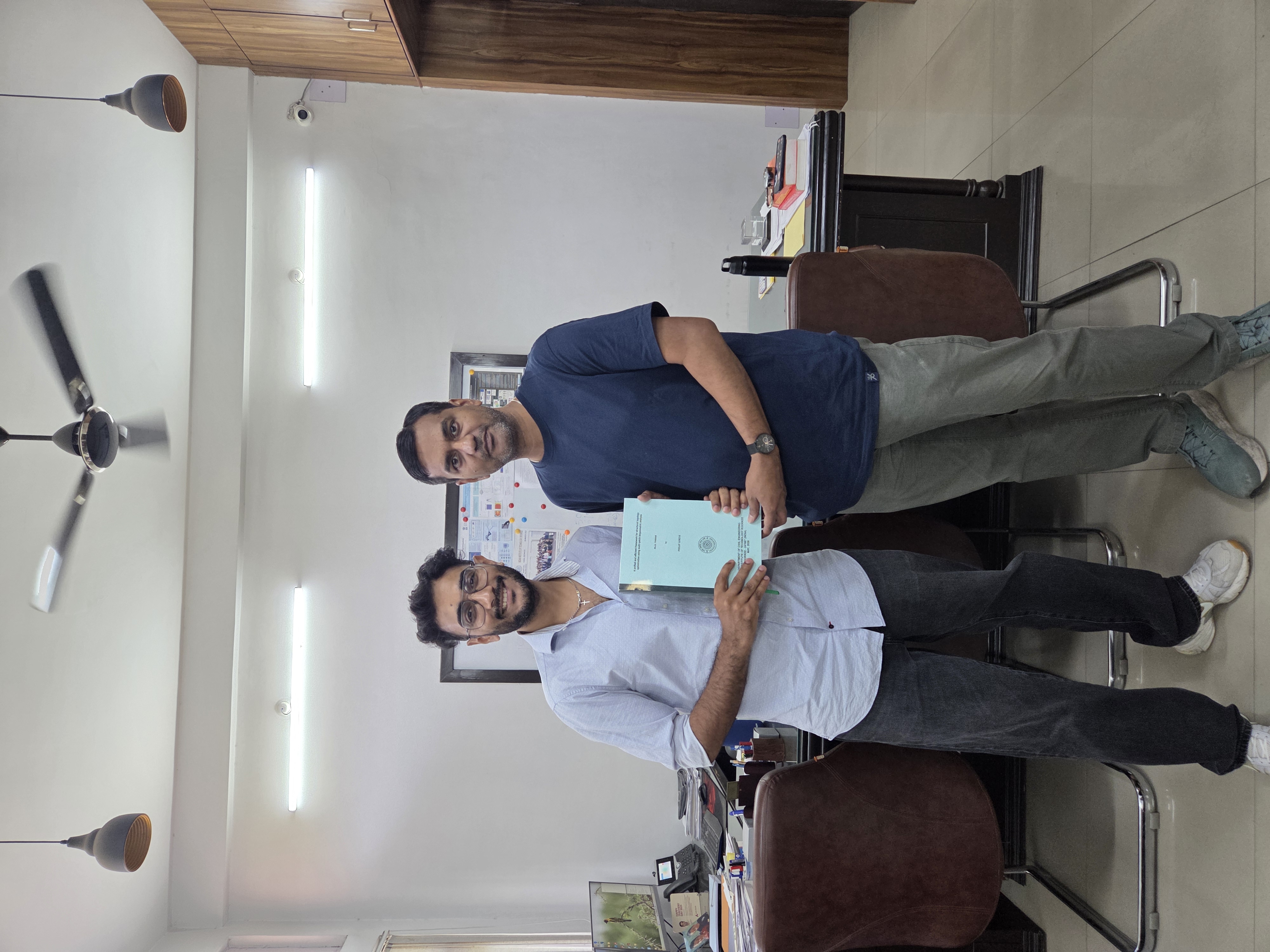
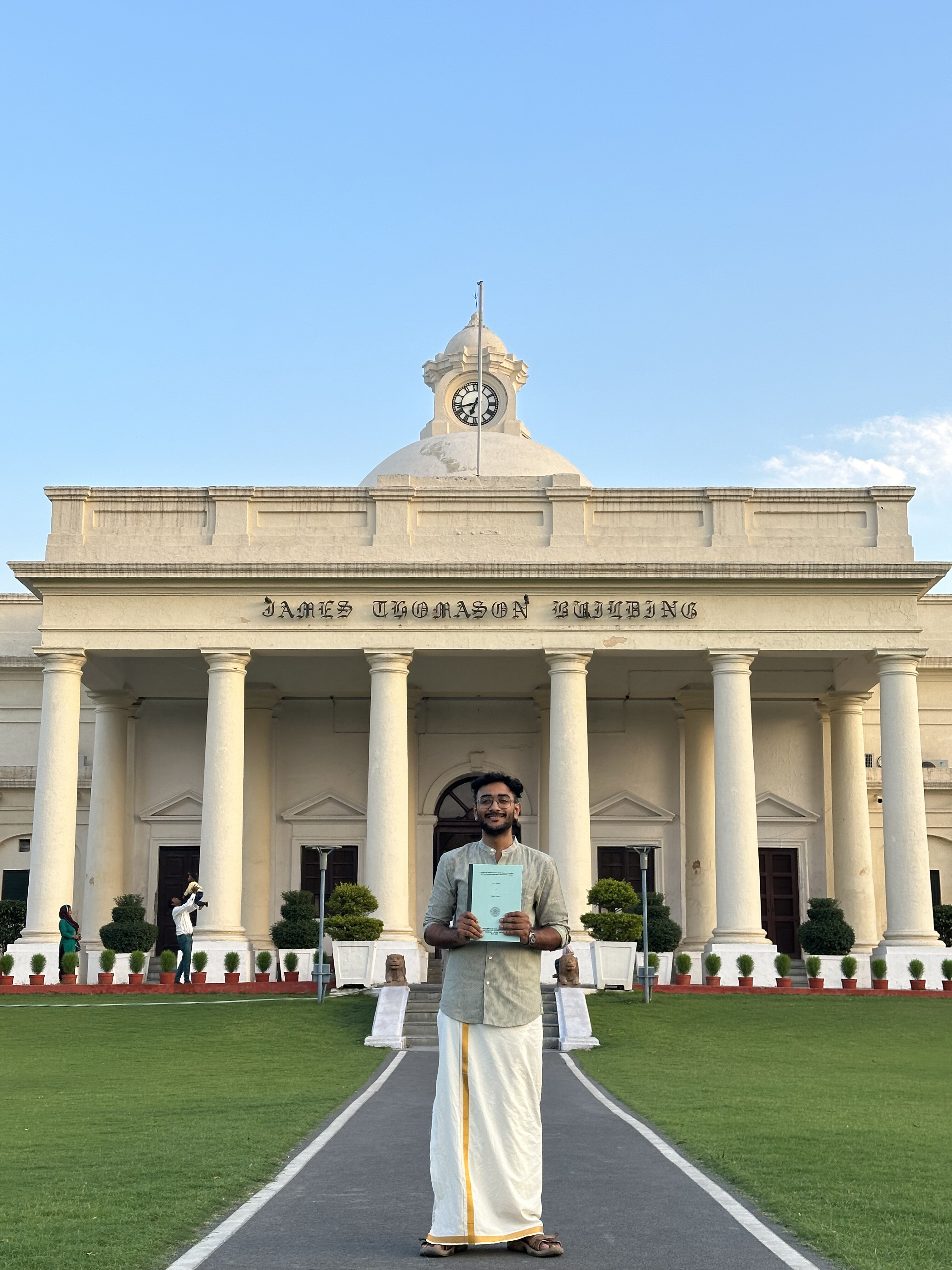
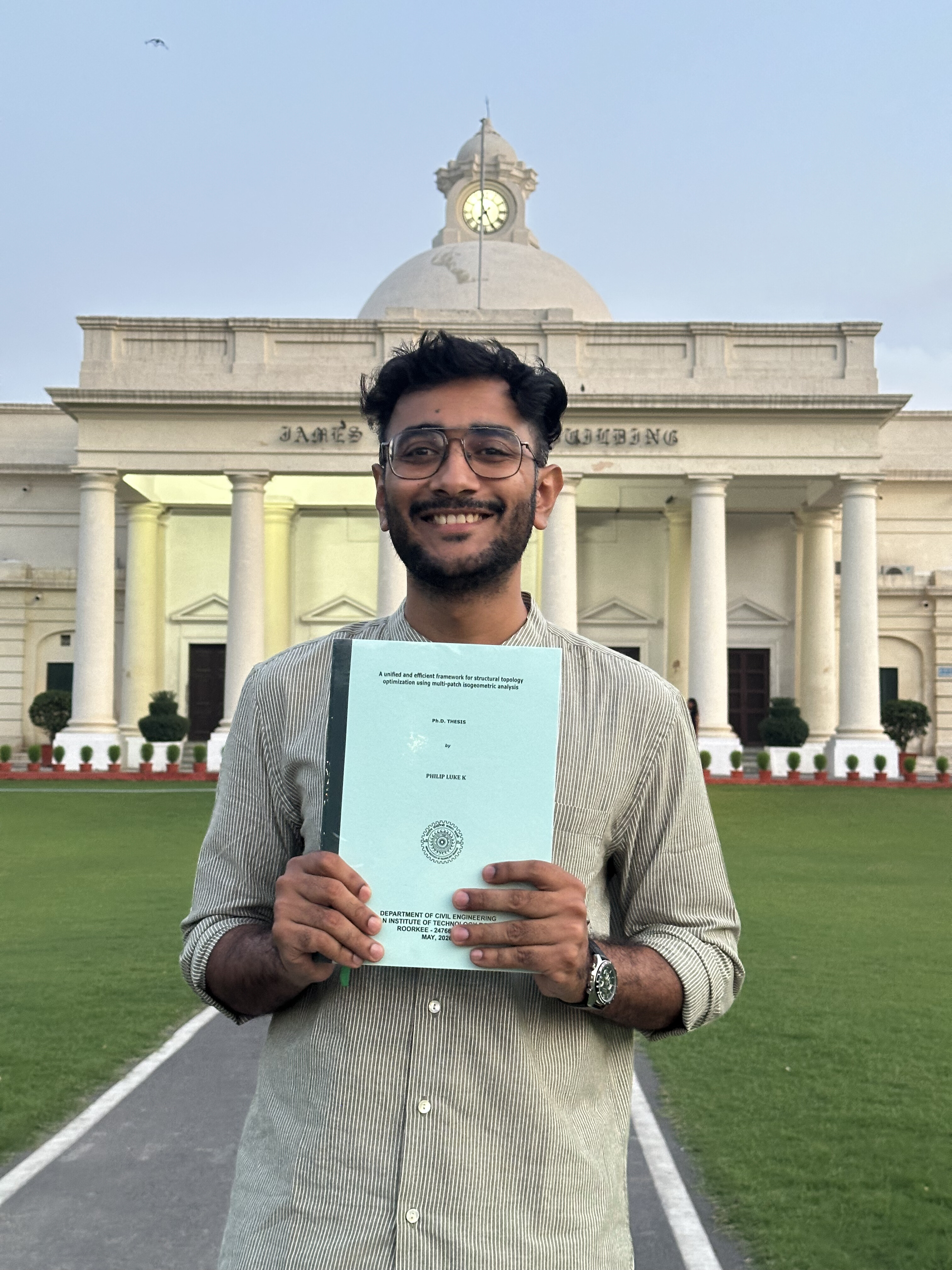
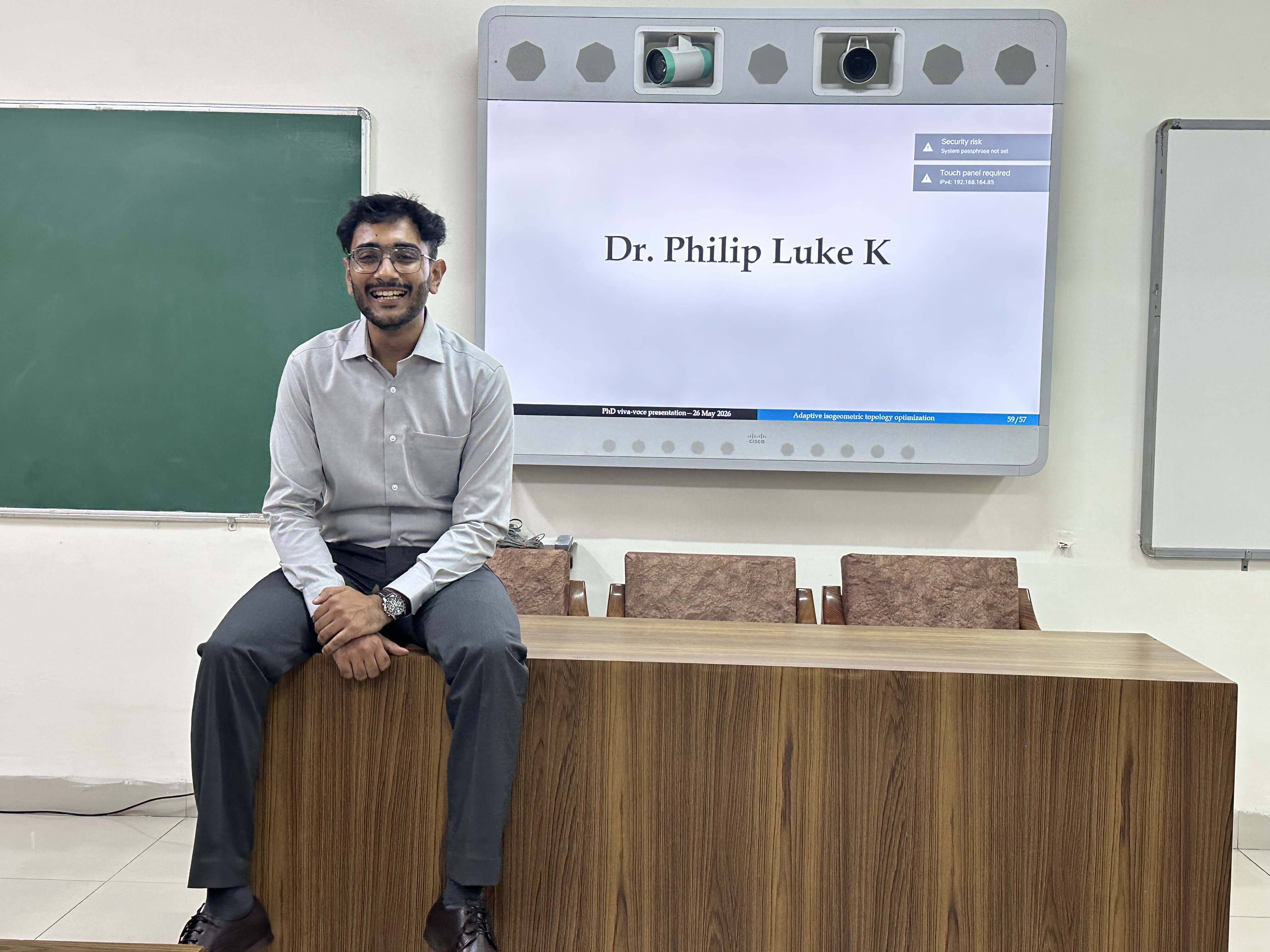
My thesis photoshoot ladies and gentleman !!!
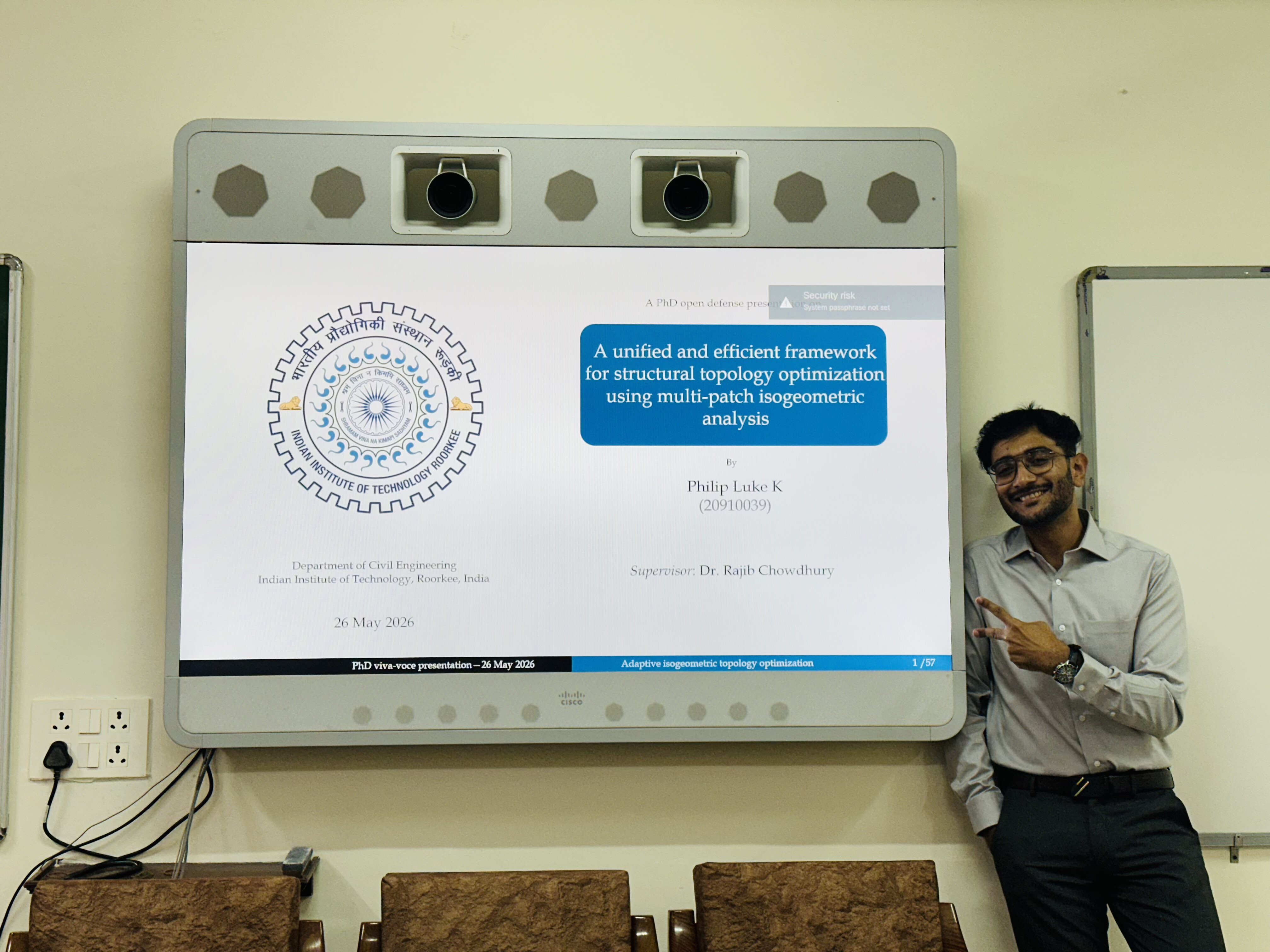
PhD Thesis Defense
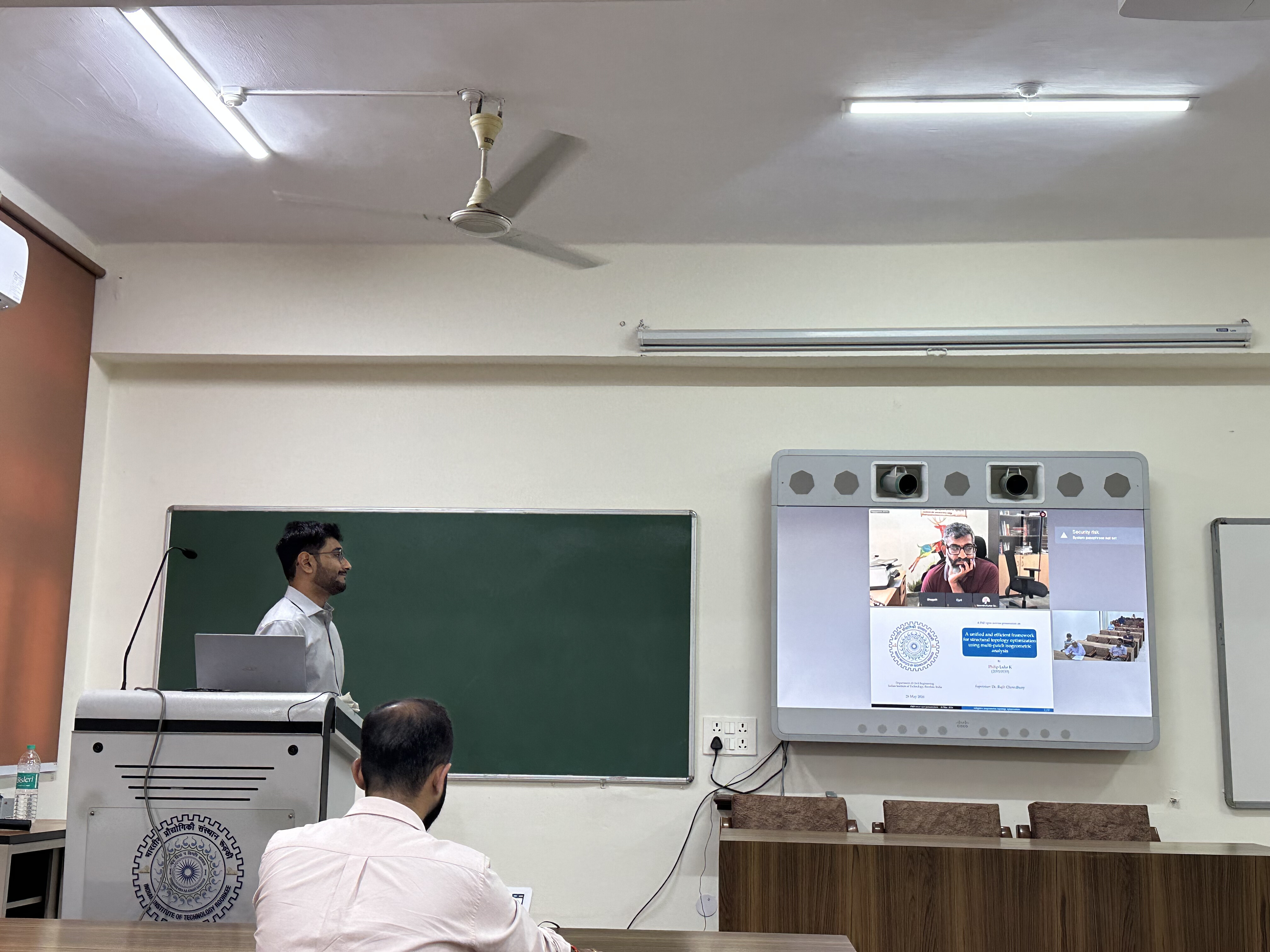
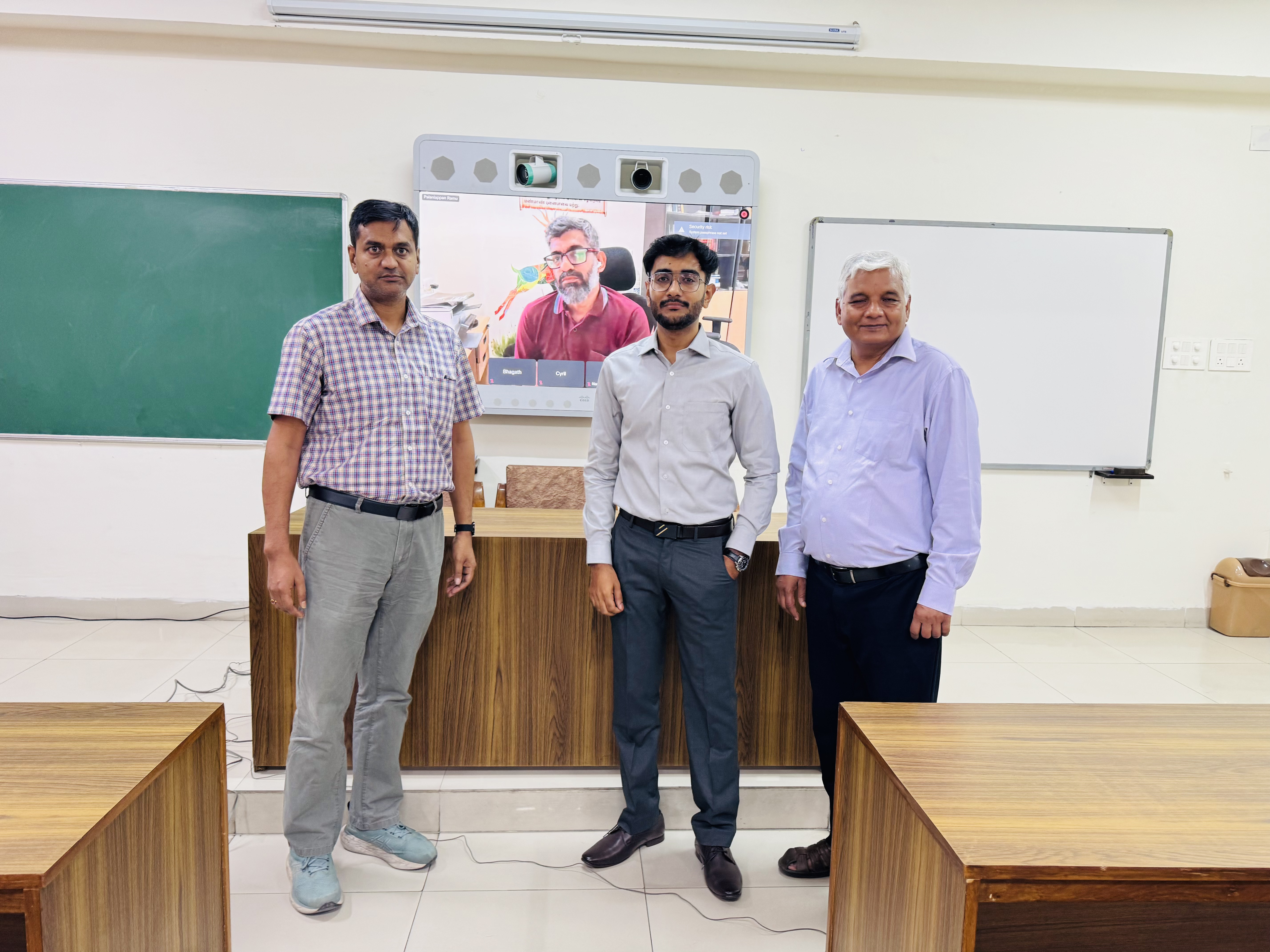
After what felt like an unusually long wait of nearly five months for the thesis review process, I finally defended my PhD thesis on 26 May 2026.
Prof. Palaniappan Ramu (IIT Madras) served as the external examiner for the defense and led the questioning during the viva. I would like to thank him for the engaging discussion and thoughtful questions. I am also grateful to the other two external reviewers who carefully examined my thesis and provided detailed comments and suggestions that significantly improved the final version of the thesis.
After spending several years working towards this day, I had imagined the defense to be the most daunting part of the entire PhD. Strangely, once it began, everything happened much faster than I had expected. By the time it was over, I found myself more surprised than relieved. After months of anticipating the final step, it was difficult to believe that the PhD had, quite simply, come to an end.
Looking back, the journey was much more than the defense itself. It involved years of learning, failed ideas, debugging, rewriting manuscripts, presenting at conferences, collaborating with wonderful researchers, and slowly building a body of work that I am proud of.
Publication in CMAME
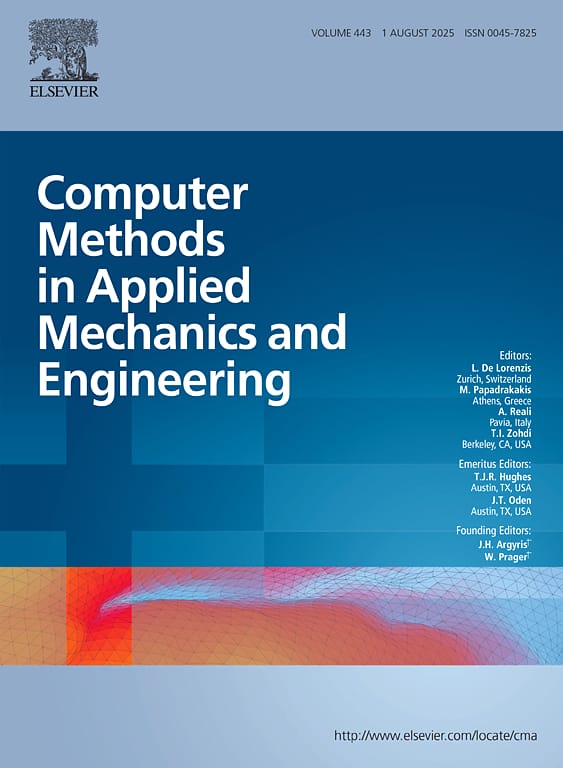
This publication marks the fifth outcome of our Adaptive Isogeometric Topology Optimization research project and is now available online in Computer Methods in Applied Mechanics and Engineering (CMAME). A particularly gratifying milestone for our team is that all five papers from this project have been accepted by our first-choice journals without any prior rejections, reflecting the quality of the research and the strength of the methodology we have developed. We are sincerely grateful to the editors for recognizing the significance of our work and to the anonymous reviewers whose thoughtful and constructive feedback helped improve each manuscript.
While our previous studies focused on the SIMP-based topology optimization framework, this work demonstrates the versatility of our adaptive isogeometric framework by extending it to reaction–diffusion equation-based topology optimization (RDE-TO). The proposed methodology integrates RDE-TO with multi-patch NURBS, adaptive mesh refinement (AMR), and the Geometry Independent Field Approximation (GIFT) framework into a unified computational approach. The framework was validated on both two- and three-dimensional benchmark problems, producing high-quality optimized designs while delivering remarkable computational speedups. You can read the paper below.
- Collaborated again with Vanderbilt University
- Extension of the methodology to a new optimization framework
- > 90% reduction in DoF and > 500x speedup achieved
Submitted my PhD thesis for review
Phew !!!
Final student research committee meeting
Presented my doctoral research in front of the internal review committee, consisting of my thesis supervisor - Dr. Rajib Chowdhury, student research committee members - Prof. Pradip Bhargava, Prof. Manish M. Joglekar, and Prof. Sudakshina Dutta. Prof. Tarun Gangwar was also presenśt.
The committee members appreciated the work, asked relevant questions and provided insightful feedback and suggestions regarding the next phase, which is thesis writing and submission.
18th U.S National Congress on Computational Mechanics
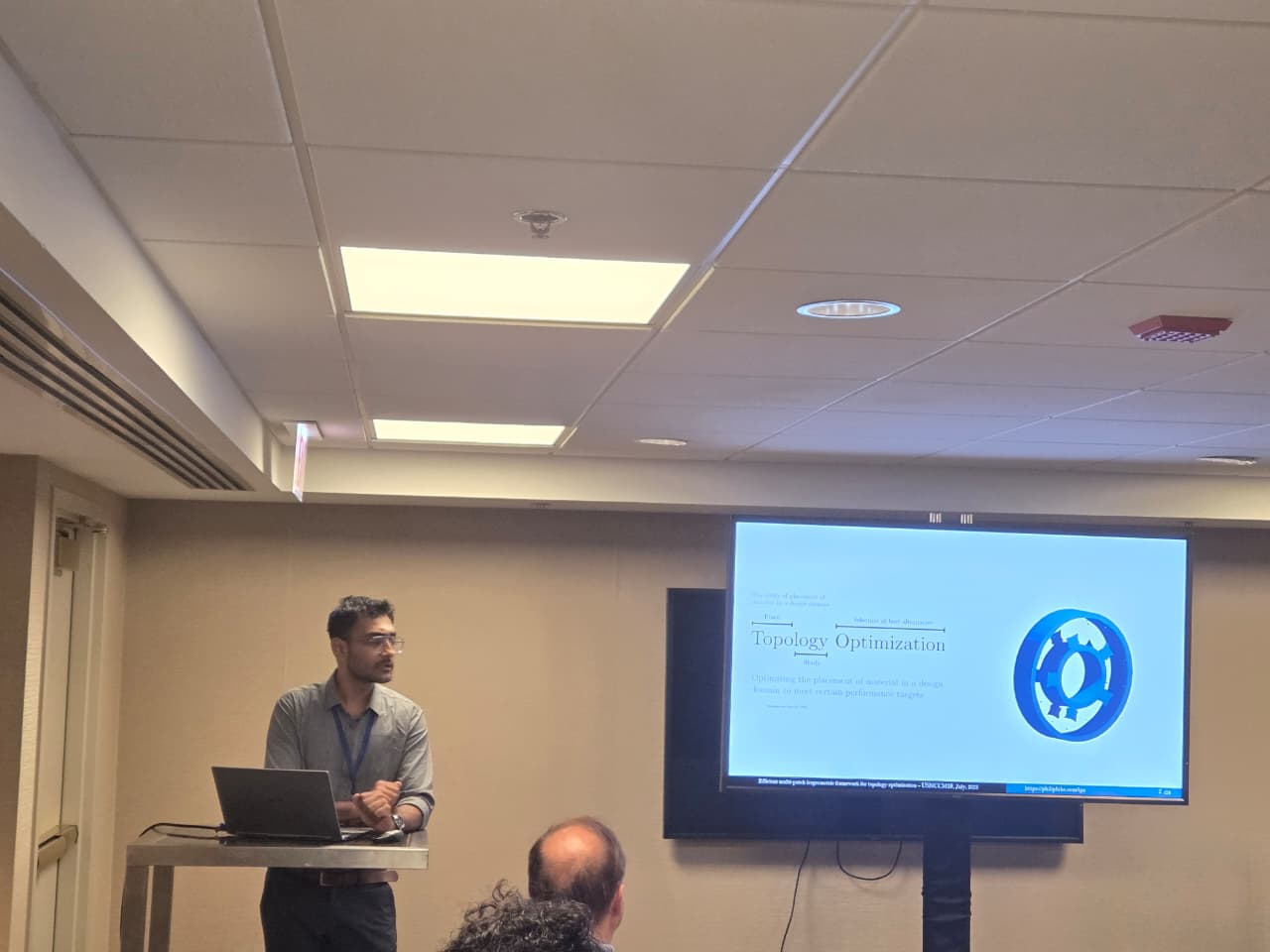
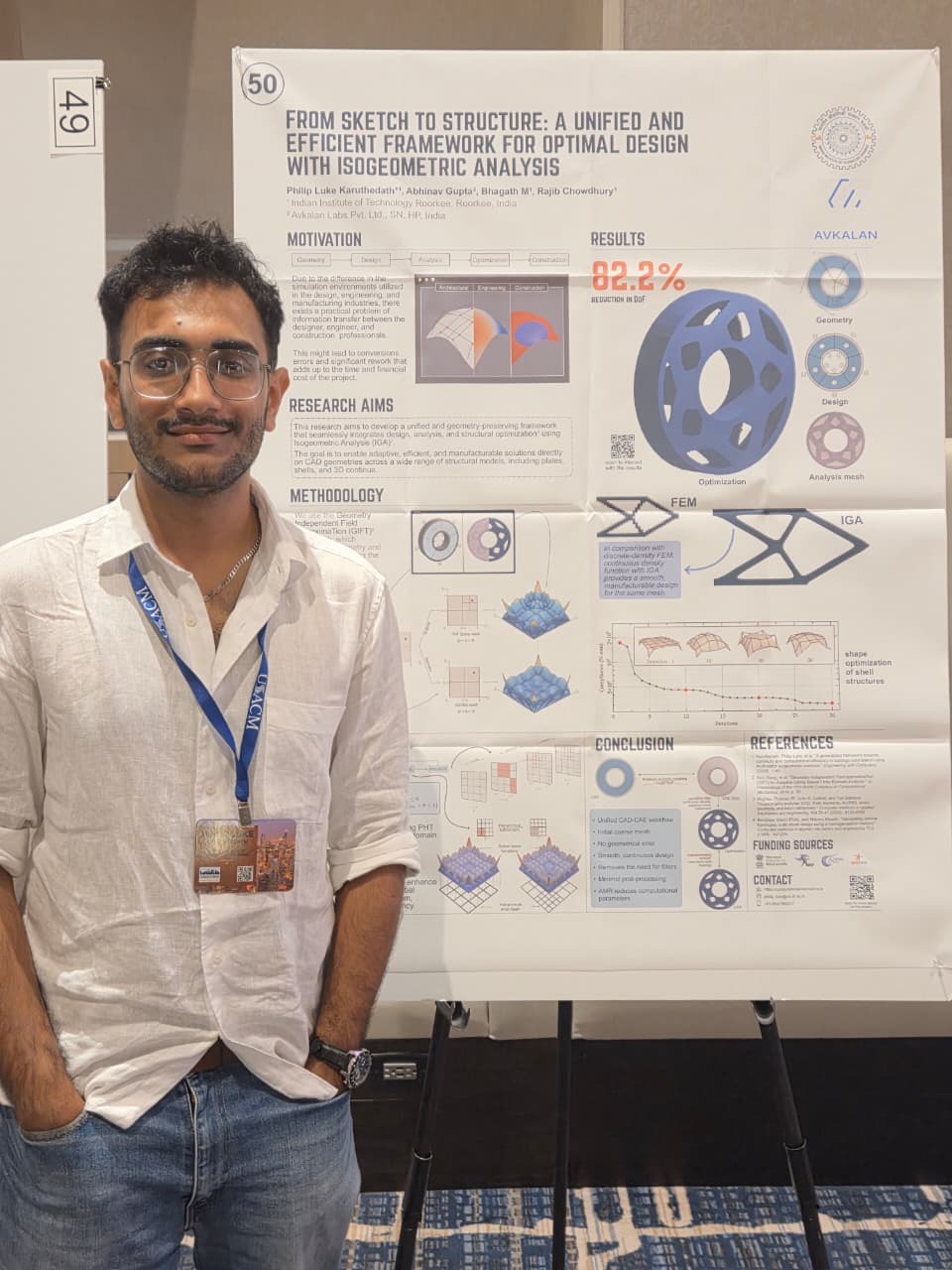
I had the opportunity to present two my research on at the 18th U.S. National Congress on Computational Mechanics, held in Chicago from July 20-24, 2025.
First, I gave an oral presentation on the efficiency of PHT-Splines in structural topology optimization of plane, 3D, plates and shell structures. Next, I presented my poster on the practical implication of multi-patch isogeometric analysis to integrate the sketch to structure part of an engineering design environment.
Had the opportunity to interact with a lot of researchers and industry people working in structural mechanics.
16th World Congress on Structural and Multidisciplinary Optimization
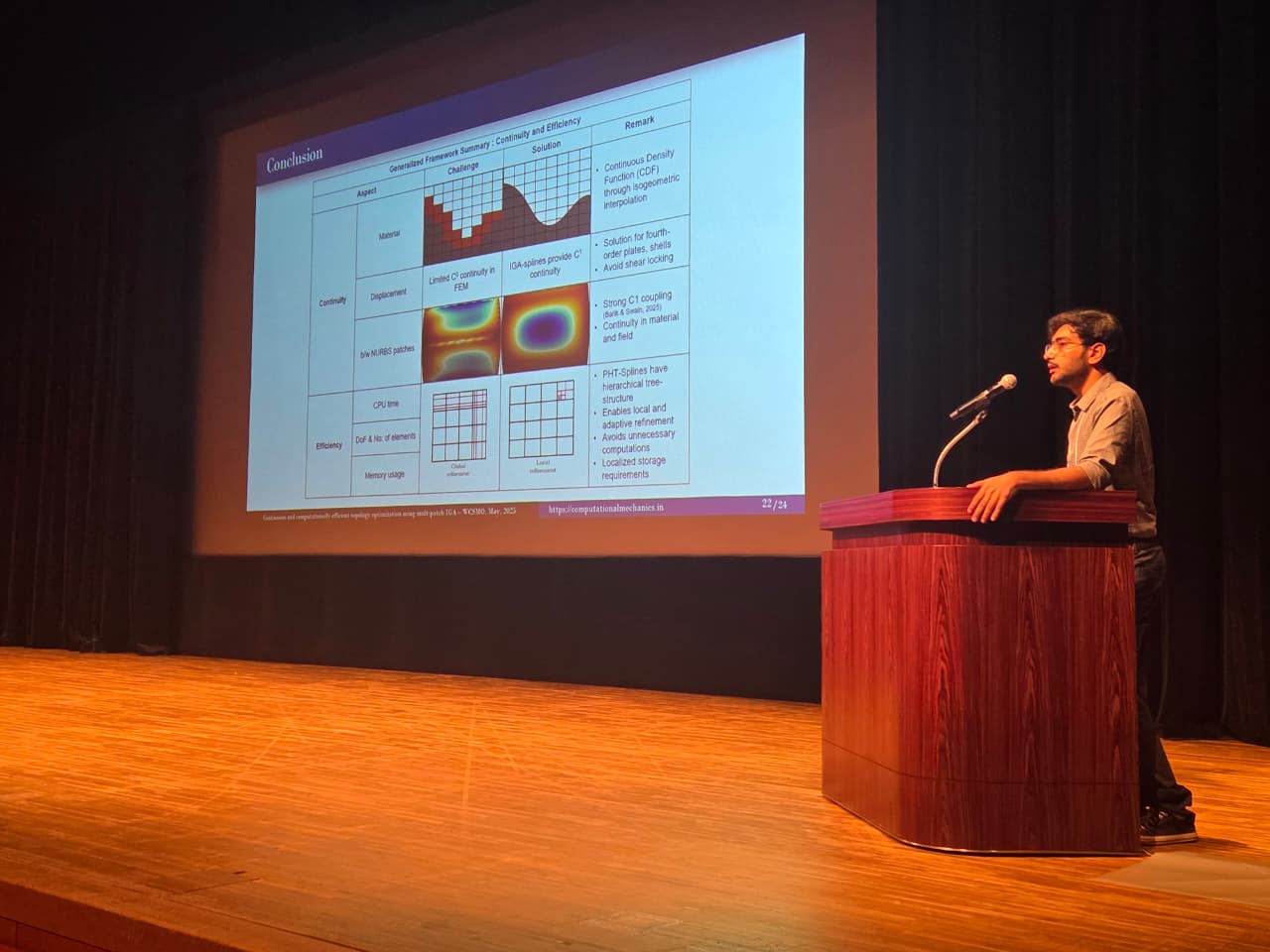
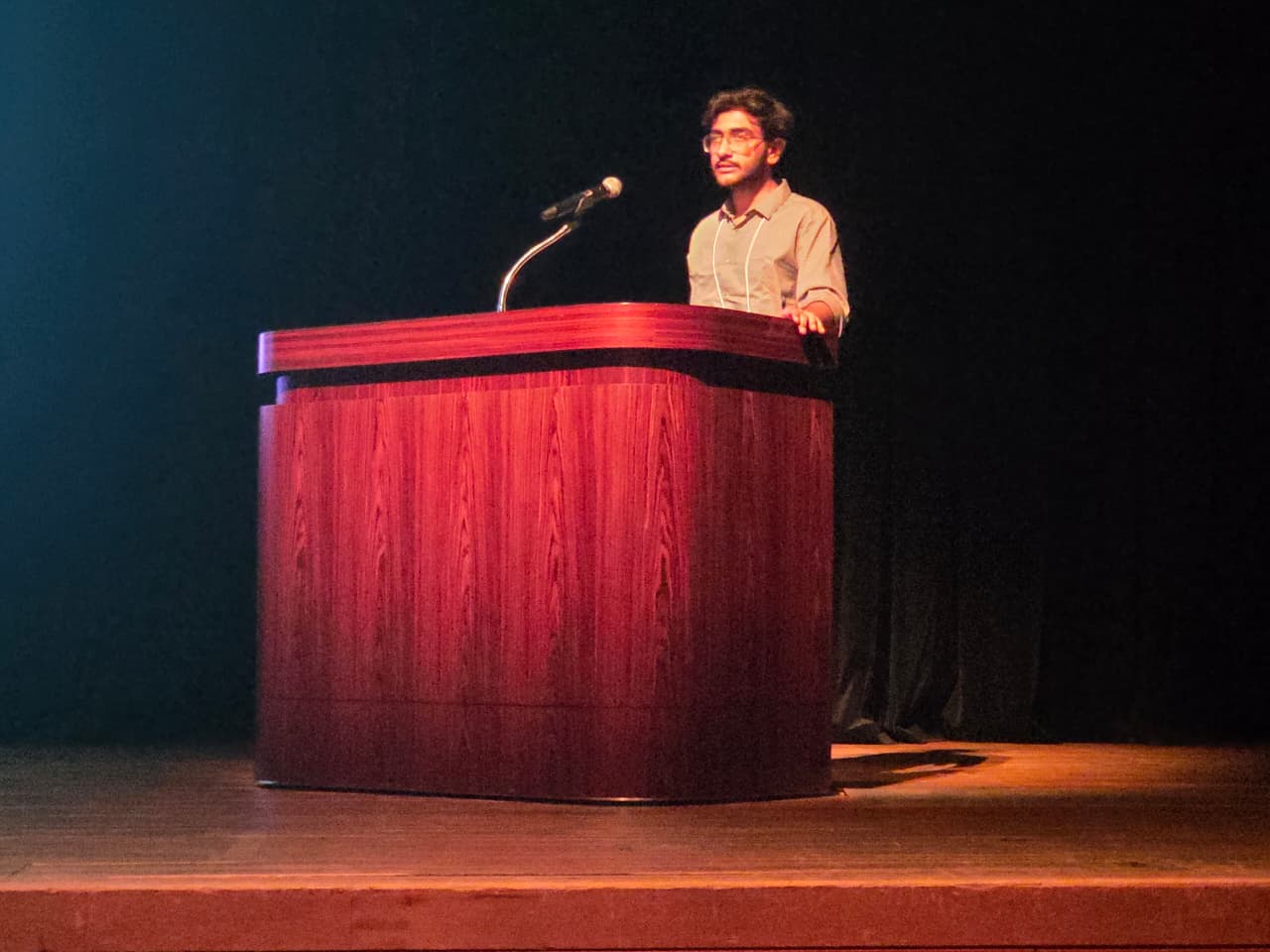
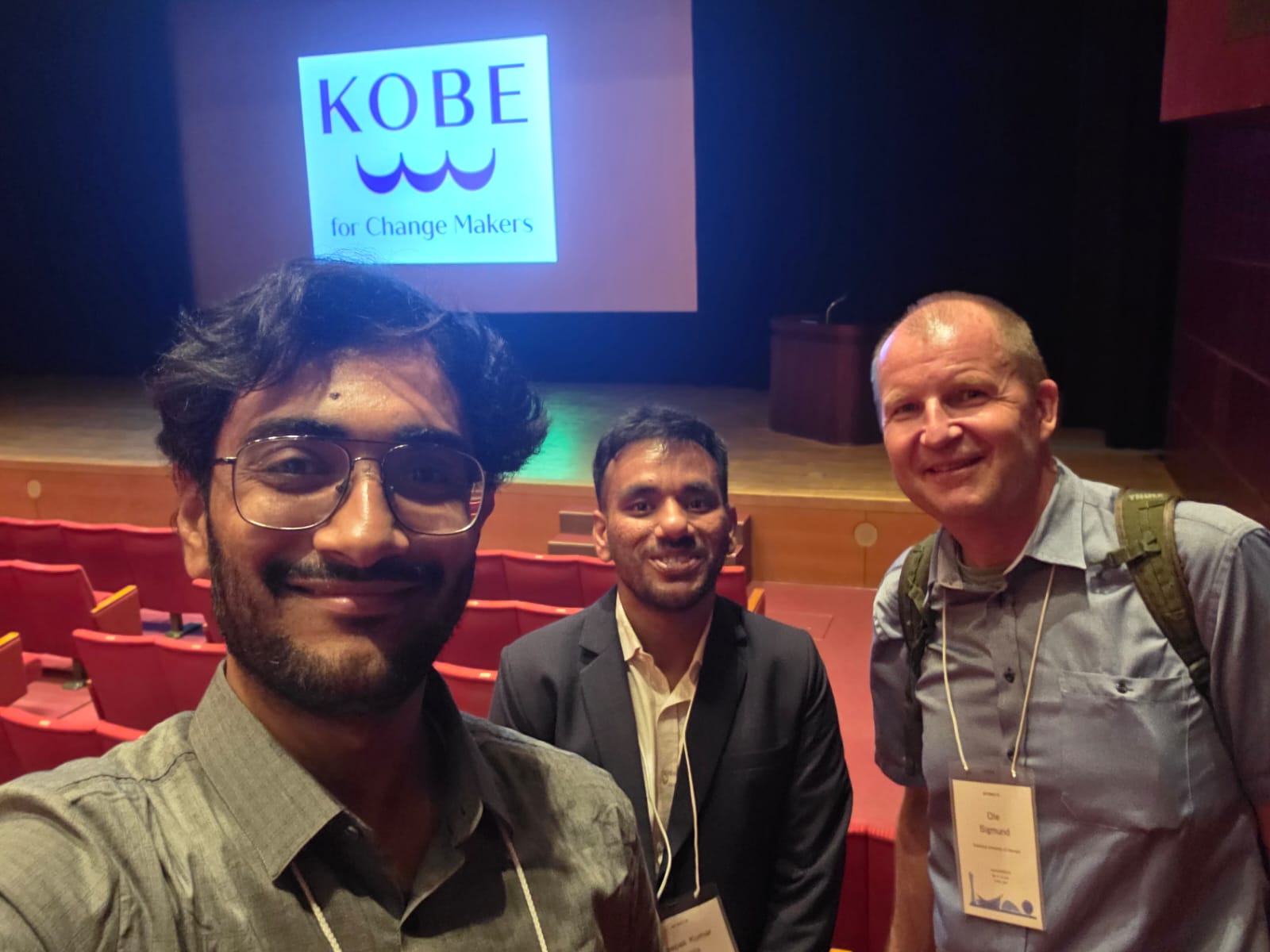
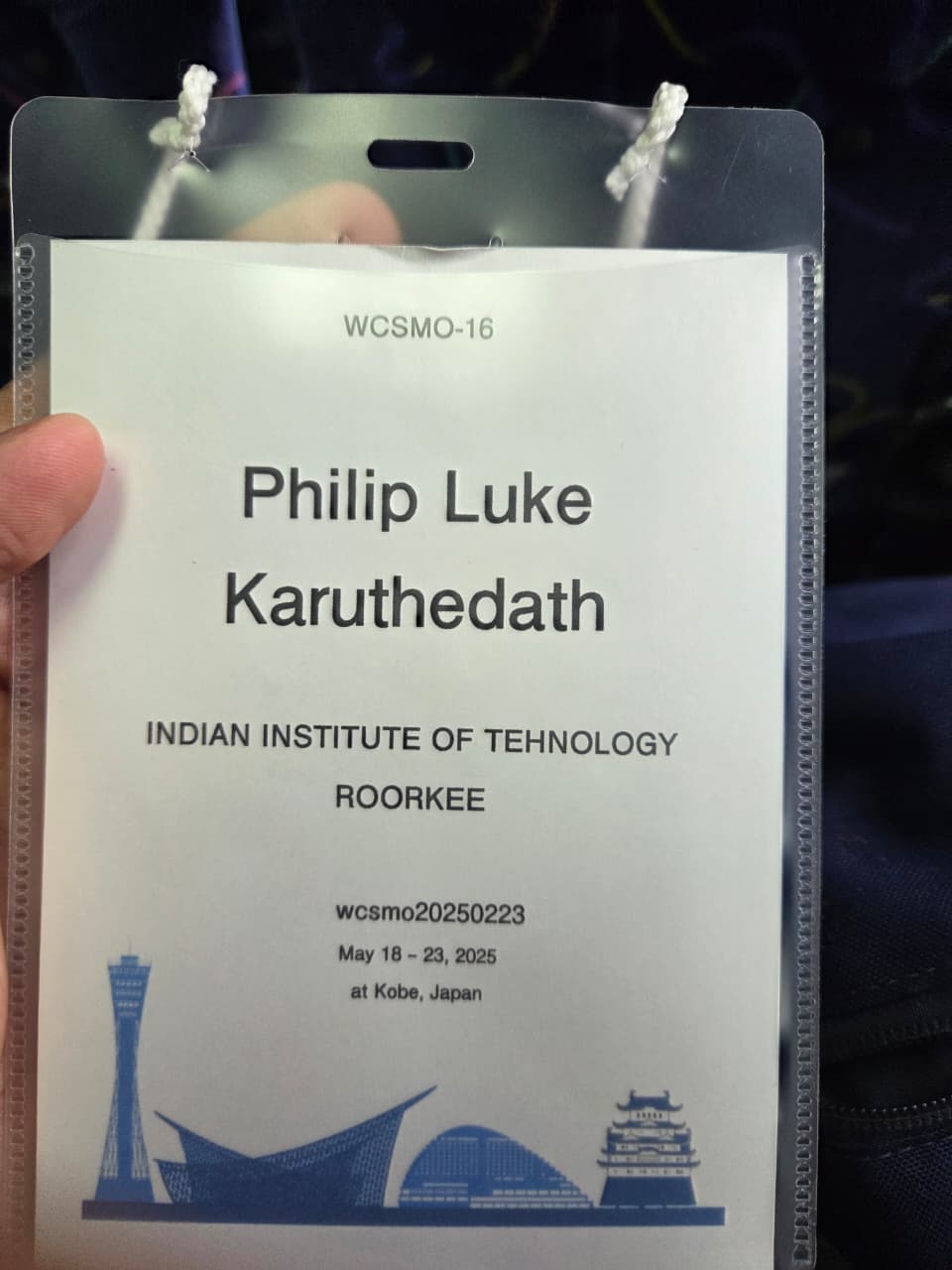
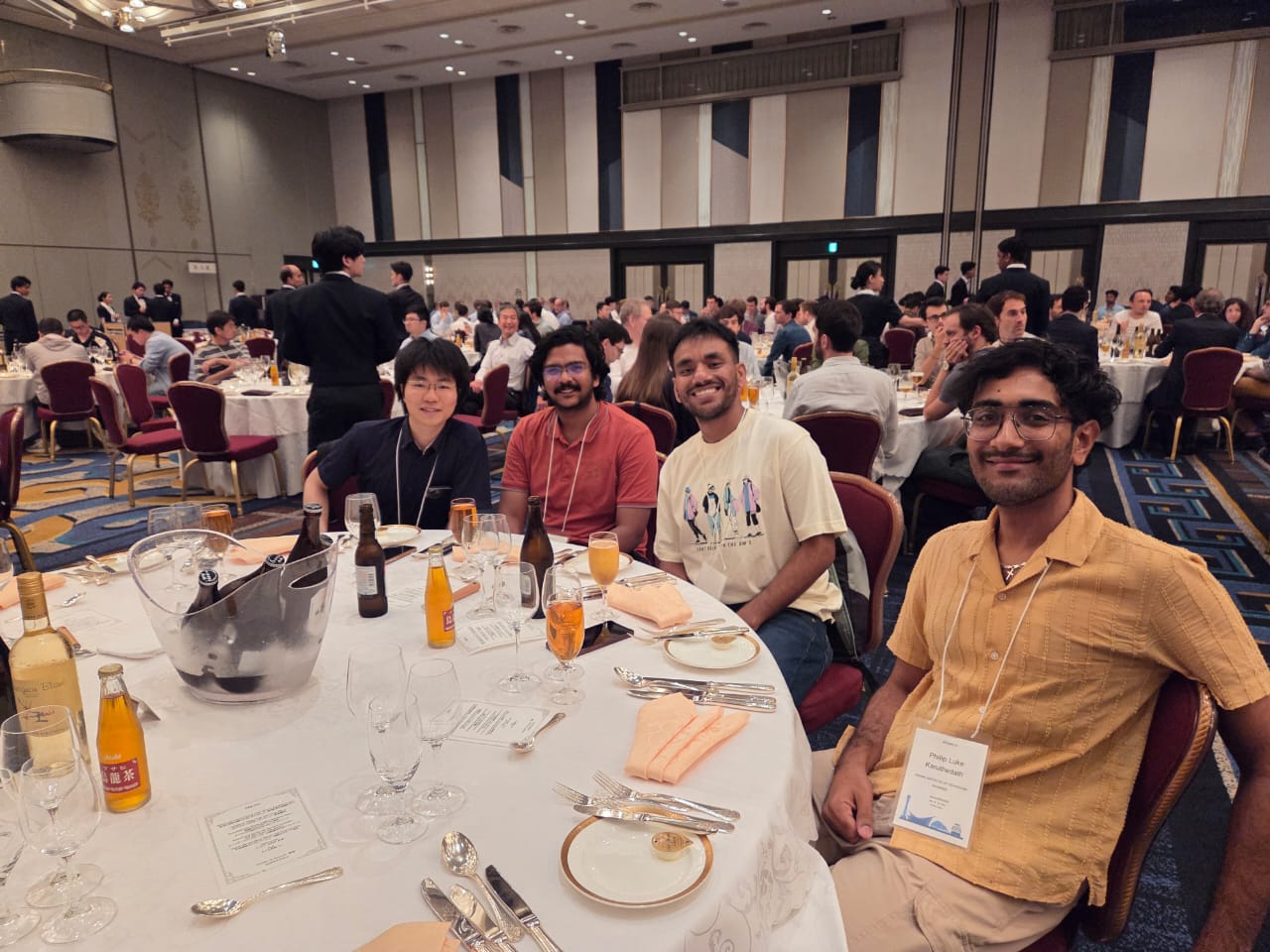
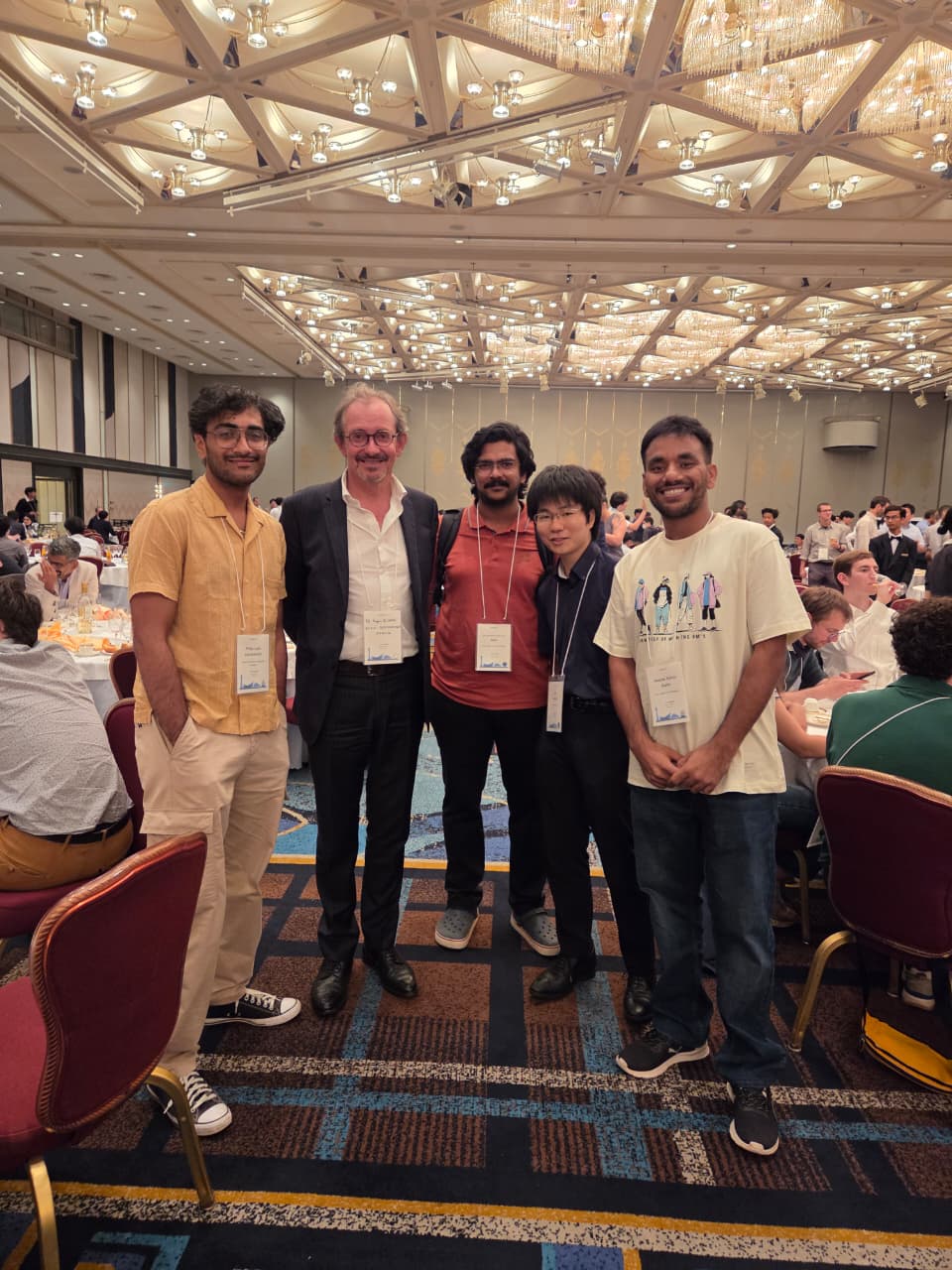
I had the opportunity to present my research at the 16th World Congress on Structural and Multidisciplinary Optimization (WCSMO 2025), held in Kobe, Japan from May 18-23, 2025. Had the opportunity to meet Dr. Ole Sigmund again and also many other pinoeers of structural optimization.
Publication in Engineering with Computers
Published our latest paper on isogeometric topology optimization. This was our fourth (and sort of final) paper on the work that our team (me, Abhinav, Bhagath, and Prof. Rajib) has been working on for the past many years (Read the history of the project here), where we combined density based topology optimization, multi-patch CAD geometries, adaptive isogeometric analysis using PHT-Splines and structural mechanics (2D, 3D, plates, and shells).
The paper proposes a generalized framework towards continuity and effciency for optimial design using multi-patch IGA.
- Collaboration with Vanderbilt University
- Generalized framework for topology optimization in structural mechanics
- Comprehensive continuity of solution and optimization with computational efficiency
National Finite Element Developer's meet
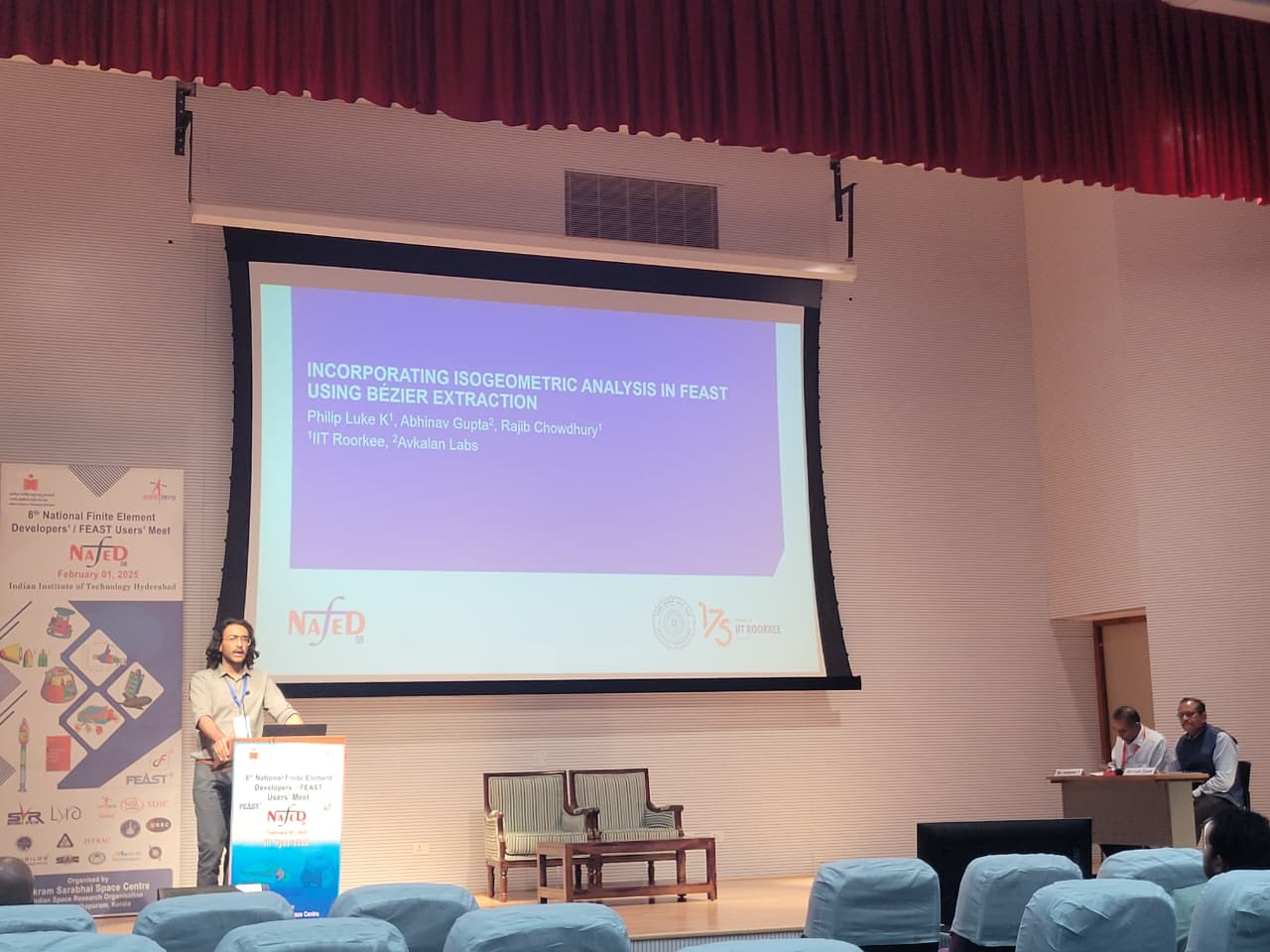
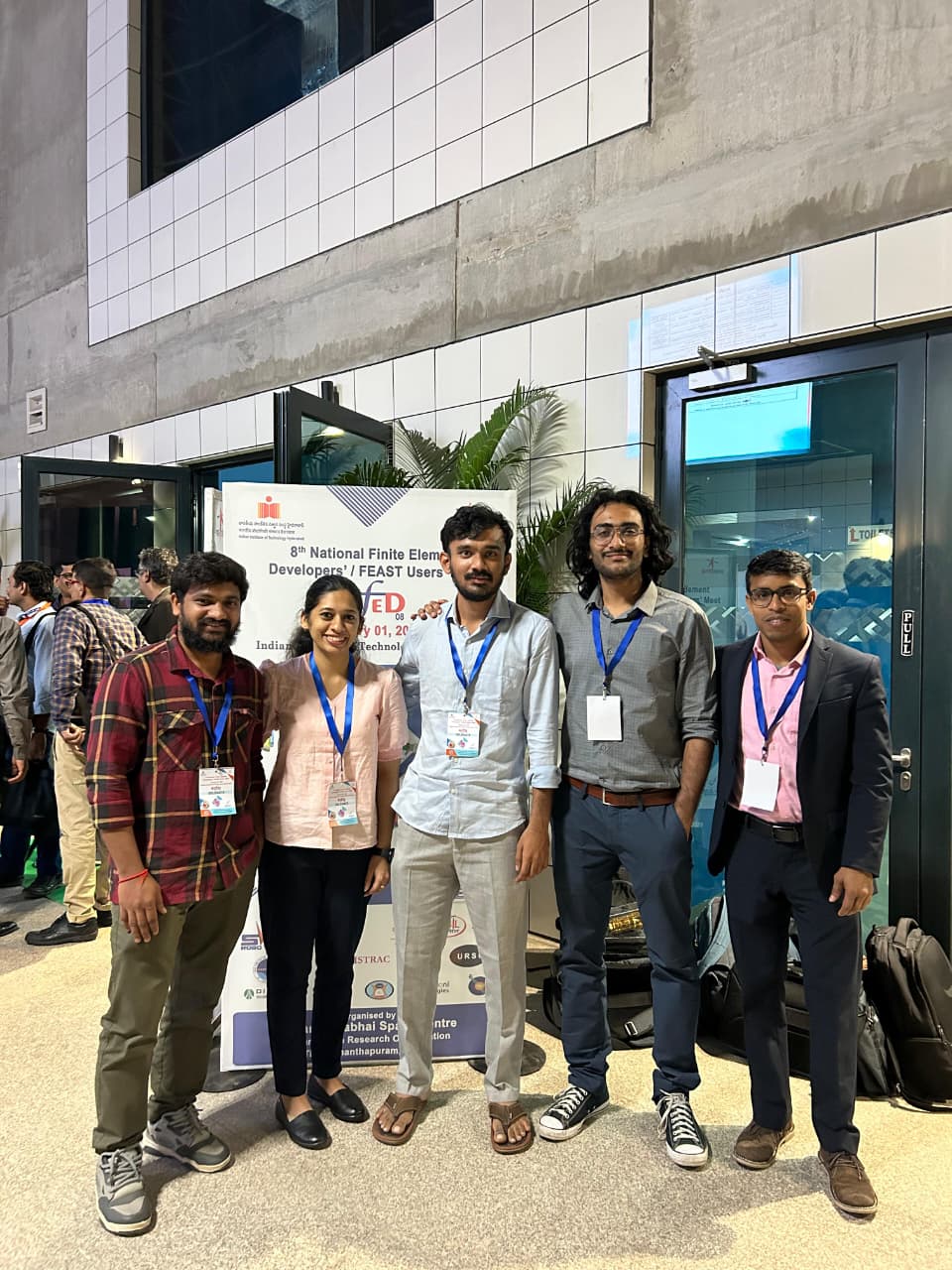
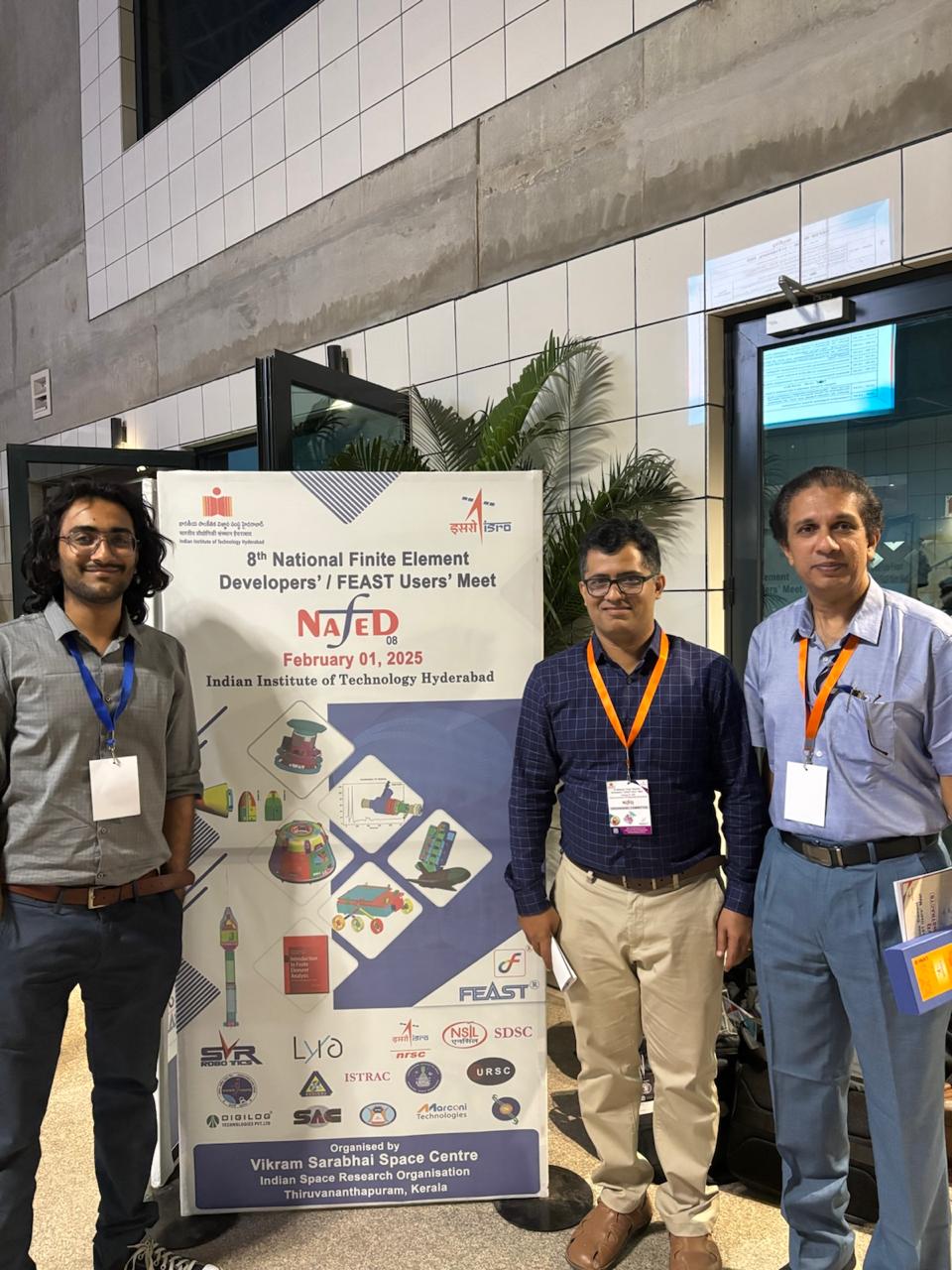
I had the opportunity to present my research and proposal at the National Finite Element Developer’s meet (NAFED 2025) held at IIT Hyderabad. This was organized by the VSSC center of Indian Space Research Organization (ISRO), as part of advancing and promoting FEAST - their structural analysis software. My presentation was on a proposal on how to implement an Isogeometric analysis (IGA) module on FEAST.
1st International and 7th National Conference on Multidisciplinary Design, Analysis and Optimization
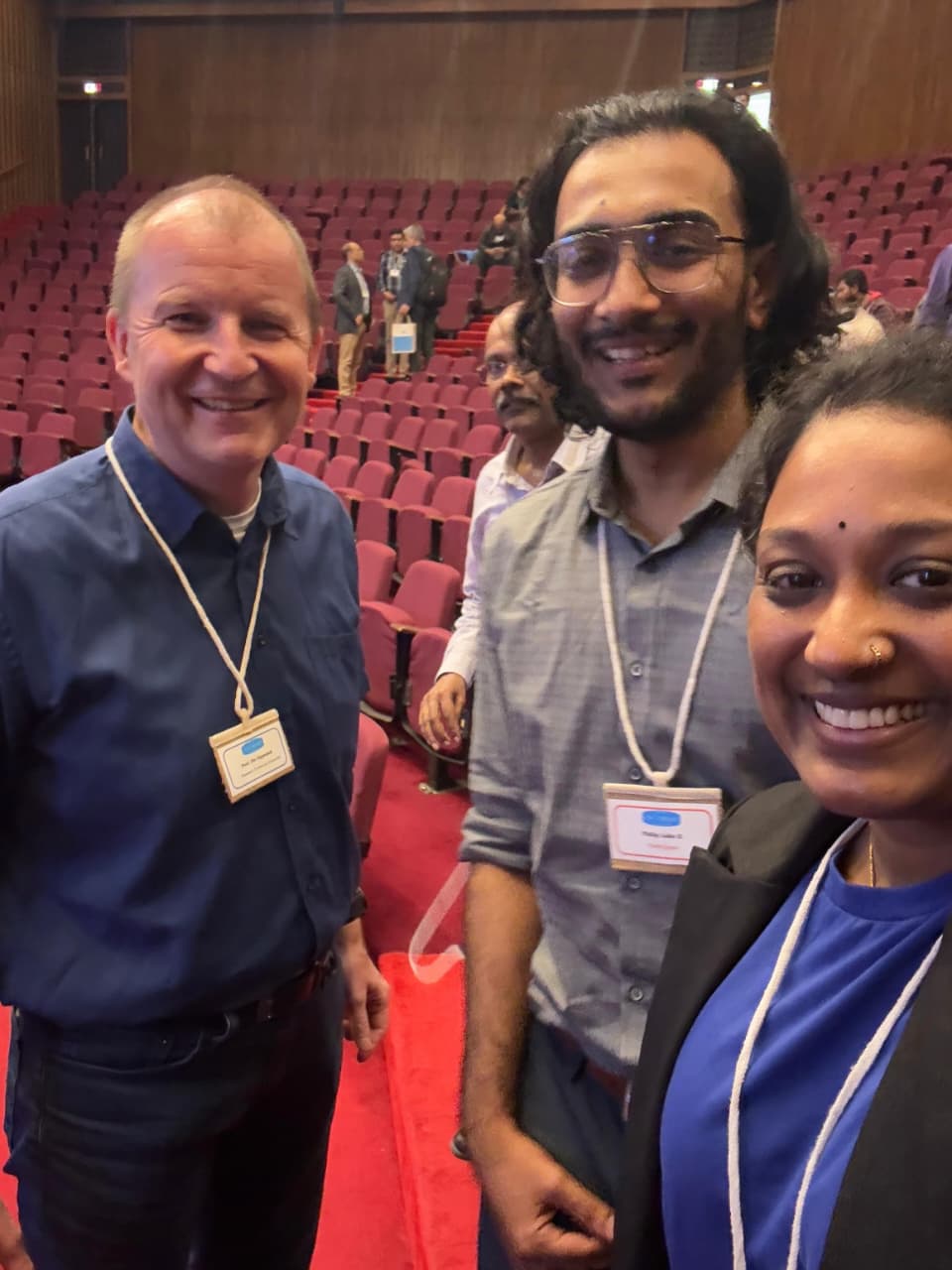
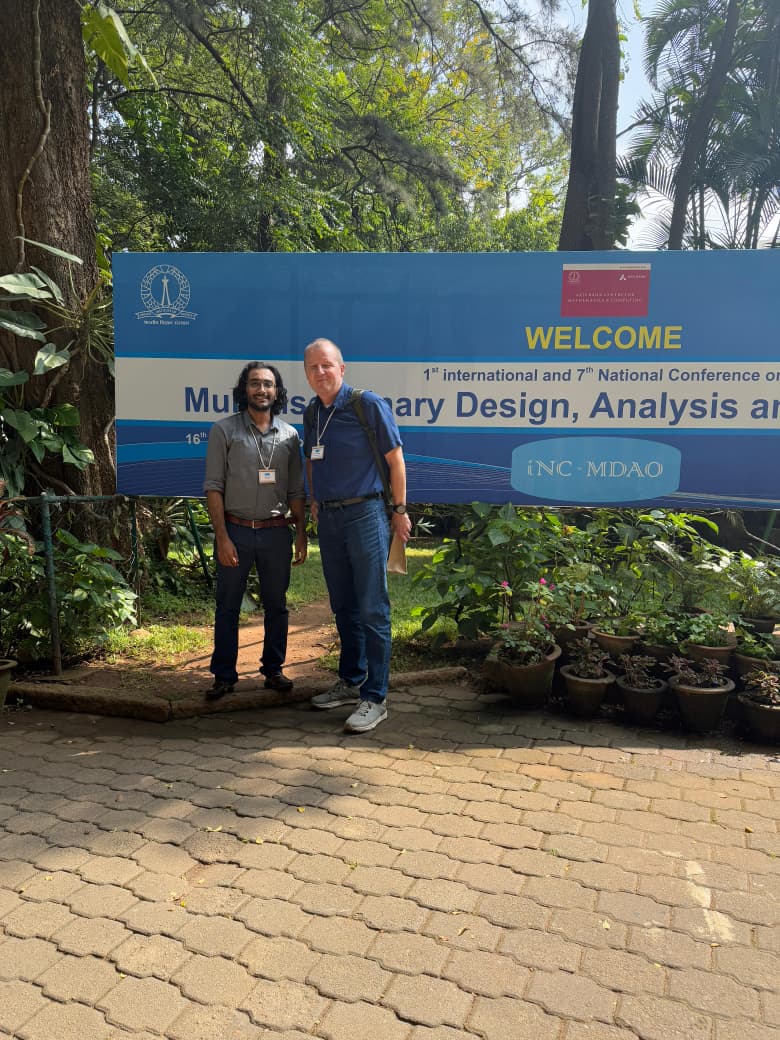
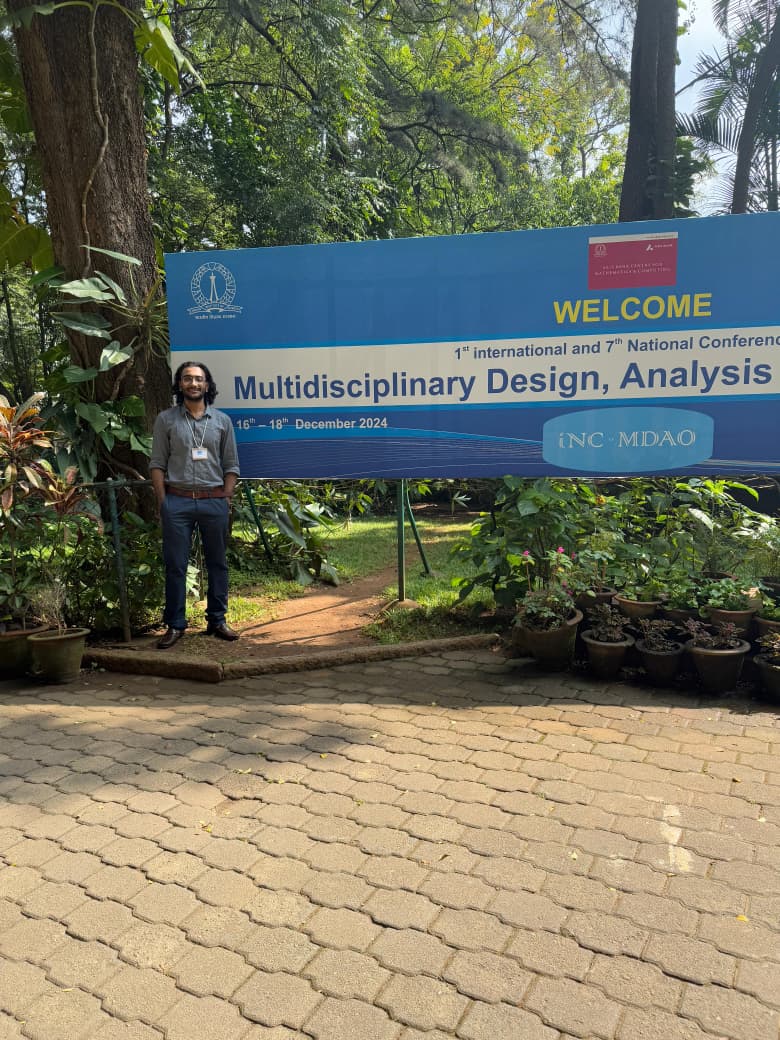
1st International and 7th National Conference on Multidisciplinary Design, Analysis and Optimization (iNCMDAO 2024), held Indian Institute of Science (IISc), Bengaluru, from December 16 – 18, 2024. My paper dealt with inverse material design on generating the geometry of auxetic metamaterials (materials with negative Poisson’s ratio) using structural topology optimization. Had the opportunity to meet and interact with Dr. Ole Sigmund, the pioneer of topology optimization.